When the Light Leaves Early: A Winter Wedding Timeline for a Historic House
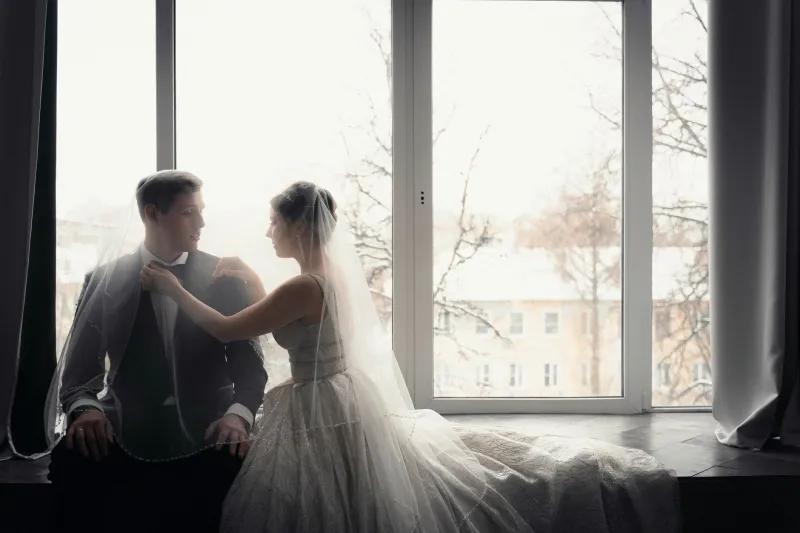
Winter weddings in Britain have a particular kind of beauty: frost on the lawn, fires in the grate, and a house that feels properly lived in. They also have a hard deadline. In mid-December, sunset in much of the UK can land around 3.50pm, and by the time you have finished group photographs the light is already turning blue. Planning around that is not pessimistic. It is how you get the photographs you actually want.
At Castle Photography, we have shot enough winter days in country houses and listed buildings to know that the best timelines are built backwards from the sunset, not forwards from the ceremony. The good news is that a short day can be a generous day. You just need to spend the light where it matters.
Start with the sunset, not the schedule
Before you choose a ceremony time, look up the sunset for your venue and your date. Not the sunset for London, unless your venue is in London. A house in a valley, a walled garden or a street of tall buildings may lose the sun much earlier than the official time suggests.
For a winter wedding in 2026 or early 2027, assume you will have useful outdoor light until roughly half an hour before sunset, and beautiful blue-hour light for perhaps 20 to 30 minutes after it. That gives you a working window, not a whole afternoon. If you want 25 minutes of couple portraits, 15 minutes of family groups and a few minutes for confetti, you need to start those photographs early. A 3pm ceremony in January is not impossible, but it is a different kind of wedding. You will be relying on interiors, flash and the glow of the house rather than the garden.
What low sun does to a historic house
Low winter sun is dramatic, but it is also fussy. It rakes across stone, picks out cobwebs in windows and throws long shadows across lawns. On a clear day it can make a south-facing facade look wonderful for about 20 minutes. On an overcast day it disappears altogether, leaving you with flat, soft light that is actually very kind for portraits.
Historic houses bring their own challenges. Thick walls mean dark interiors. Small windows mean pools of light rather than even brightness. Heavy curtains, shutters and protective blinds may be closed for conservation reasons. The rooms that look romantic by candlelight can be very dark on camera, and mixed lighting from table lamps, chandeliers and emergency exits can turn skin tones strange if you are not careful.
The answer is not to fight the building. It is to work with the light it gives you. Find the brightest window, clear a space near it, and let the couple stand in the soft edge of the light rather than the direct glare. A doorway can be a natural frame. A pale wall can bounce light back into a face. A dark panelled room can be beautiful if you expose for the highlights and let the shadows do their thing.
A sample timeline for a 1pm ceremony
This is a realistic winter shape for a historic house wedding. Adjust the times to your venue, your registrar and your appetite for early starts.
- 11.30am: Details, prep and a few quiet portraits in the best window light.
- 12.30pm: Guests arrive. Keep the entrance clear for candids and hugs.
- 1pm: Ceremony.
- 1.45pm: Drinks reception. Do group photographs immediately, while everyone is still in one place and the light is still usable.
- 2.15pm: Couple portraits outside or undercover. Twenty to twenty-five minutes is plenty in winter.
- 2.45pm: Confetti, family groups and a few relaxed portraits by the main entrance.
- 3.10pm: Back inside for window-light portraits and detail shots as the light drops.
- 3.30pm: Dusk exteriors or blue-hour photographs with the house lit from within.
- 4pm: Speeches in the drawing room or library.
- 5pm: Meal.
- 7.30pm: First dance and evening candids.
If the ceremony runs late, cut the group list, not the couple portraits. You can photograph groups during drinks, but you cannot recreate the last of the daylight.
Window-light tricks that work in old buildings
Windows are your softboxes. Position the couple at roughly 45 degrees to the glass so the light falls across one side of the face and leaves a little shadow on the other. If the window is very bright, expose for the faces and let the garden blow out. If the room is very dark, turn off overhead lights where you can and use the window as the main source. A white wall, a pale tablecloth or a sheet of foam board can bounce light back in.
Sheer curtains are useful. Heavy curtains are useful too, but only if you can open them without upsetting the venue. Always ask before moving furniture, closing shutters or taping anything to a wall. Historic houses have rules for good reasons, and a quick conversation with the house manager will save you a lot of trouble.
Flash advice that respects the room
On-camera flash bounced off a high ceiling can work, but it can also make a wood-panelled room look like a leisure centre. Off-camera flash, used sparingly, is usually better. Put a warm gel on the flash to match the lamps, keep the power low, and use a slow enough shutter speed to let some of the room's atmosphere in. If you are photographing speeches, check whether flash is allowed before the day. Some venues prefer continuous LED panels; others are happy with flash as long as you are not firing it into a listed ceiling.
Make sure your photographer has public liability insurance and a clear understanding of the venue's rules. That is not red tape. It is how everyone stays welcome.
Contingencies that actually work
Have a wet-weather plan and a dark-weather plan. They are not the same thing. A wet plan might be a covered cloister, a porch or a conservatory. A dark plan might be a staircase, a library with a big window or a drawing room with the lamps turned up. Pack a clear umbrella, a small torch, a reflector and a cloth for drying stone steps.
Most importantly, tell your photographer which three photographs matter most. If the light fails, those are the ones you protect. A winter wedding does not need to be a compromise. It just needs a timeline that admits the sun has somewhere else to be.